- Background
World Heritage interpretation and presentation refers to the processes and methods of communicating the values and significance of a World Heritage site to local communities, visitors and the wider public. Interpretation and presentation are critical for the conservation and management of World Heritage sites to ensure that they are valued, protected, and appreciated by both present and future generations. Effective interpretation and presentation also involve the sharing of knowledge and information among stakeholders, including local communities, tourism operators, and other relevant organizations. Collaborative and participatory approaches are essential to ensure that the interpretation and presentation are culturally appropriate, sustainable, and respectful of the site’s values and the rights of its stakeholders. Interpretation and presentation of World Heritage sites play a vital role in promoting understanding, appreciation, and stewardship of cultural and natural heritage, sustainable tourism and ensuring its continuity and viability for current and future generations.
In 2022, the International Centre for the Interpretation and Presentation of World Heritage Sites, under the auspices of UNESCO (WHIPIC), was officially inaugurated as one of UNESCO’s Category 2 institutes. WHIPIC was established to promote the understanding and protection of World Heritage through inclusive interpretation and presentation. WHIPIC believes that heritage interpretation and presentation are critical components of World Heritage processes aiming at ensuring sustainable conservation and management of sites. This vision is aligned with the priorities identified by World Heritage site managers as expressed in the Framework of the Third Cycle Action Plan in the African Region and the Arab States (2021-2027). Effective management of World Heritage in the African continent requires strengthening the capacities of key stakeholders to develop strategies and plans, including for presentation and interpretation, through participatory processes and the engagement of local communities, including women and youth, in all processes concerning the protection, conservation and promotion of World Heritage. True to its mandate to supports the effective conservation and preservation of the natural and cultural heritage of Outstanding Universal Value in Africa, the African World Heritage Fund (AWHF) thrives to assist African States Parties to strengthen the capacities on heritage professionals in the interpretation and presentation of World Heritage.
It is within this nexus of concerns and framework that WHIPIC and AWHF are co-organizing the third edition of the Workshop on the Interpretation and Presentation of World Heritage in Africa to be held Online, and in-person in Accra, Ghana. This initiative is supported by the Cultural Heritage Administration of the Republic of Korea and will be implemented in partnership with Ghana Museums and Monuments Board (GMMB).
- Format of the Workshop
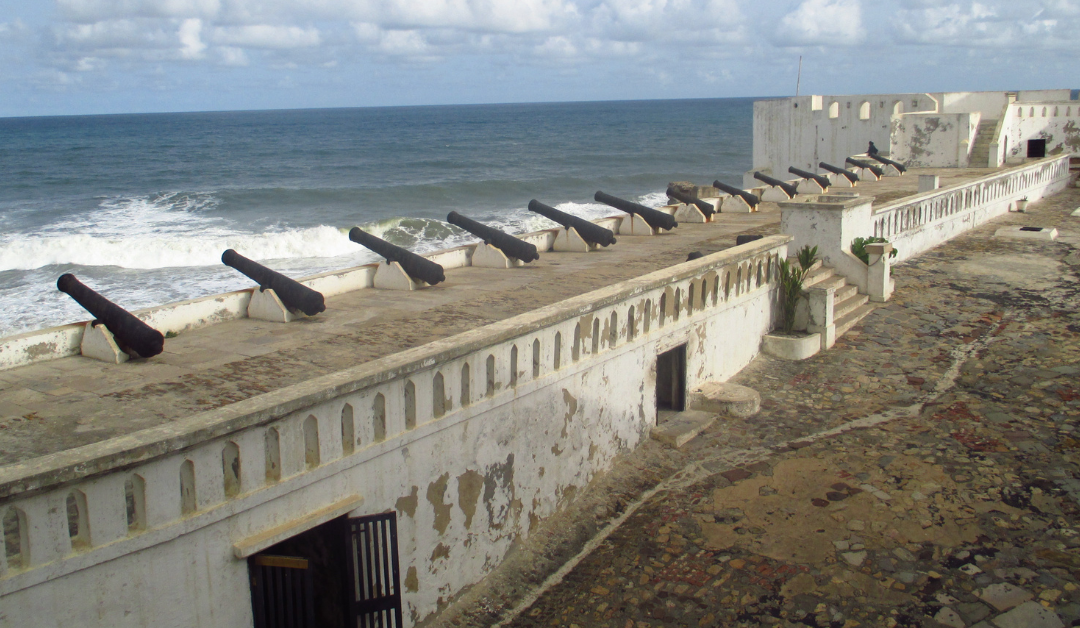
The Forum will comprise two phases. The first phase will be an online session focusing on the theoretical premises and background concerning interpretation and presentation of World Heritage (e.g., World Heritage Convention and the Operational Guidelines, the Outstanding Universal Values and heritage management processes [Heritage Impact Assessment], community engagement in conservation and management of World Heritage, heritage interpretation and presentation theories and principles, heritage interpretation and presentation in practice. The virtual workshop will also allow participants to briefly present the profiles of their World Heritage properties concerning status quo of interpretation and presentation. At the end of the online session, participants will be given an assignment to improve their case study (i.e., work on presentation and interpretation of their sites). The second phase will consist of in-person workshop at Forts and Castles, Volta, Greater Accra, Central and Western Regions in Ghana where participants will have the opportunity to engage in practical exercises and further the theoretical discussions focusing on a specific case study. This phase will comprise site visits and engagement with key stakeholders at the World Heritage Site.


- Case studies
Each participant is required to submit a case study (approximately 500 words) describing a heritage site with which they have experience as a part of the application. This experience will be presented during the course of the Workshop and will give participants a chance to become better acquainted with World Heritage in the region.
The case study must contain, at a minimum, the following sections, under the headings:
- Description of the site (World Heritage context)
- Conservation, management, interpretation, and presentation of the property
- Challenges facing the property regarding interpretation and presentation.
- Good practices in the interpretation and presentation of the property
- Selection criteria of participants
Participants for this workshop shall be selected based on the following criteria, considering gender and geographic representation balance:
- Have at least 5 years of experience working in the field of cultural and/or natural heritage, including World Heritage area;
- Be fluent (speaking, reading and writing) in the working language of the workshop (English);
- Demonstrable good knowledge of the World Heritage Convention and the Operational Guidelines for the Implementation of the 1972 World Heritage Convention;
- Experience in heritage conservation and management, interpretation and presentation, research, data analysis and report writing in the field of cultural and/or natural heritage;
- Be motivated, active and interested in engaging in the field of World Heritage;

